POOL PUMP REPAIR •
Pool Pump Repair in
Empire Pools handles complete pool pump diagnostics and repair for homeowners — priming issues, noisy
motors, leaks at the pump housing, failing seals, and inefficient circulation that keeps your pool from staying clear.
In , pump issues are often tied to the “whole system,” not just the motor: clogged baskets that starve the pump,
small suction-side air leaks that show up as bubbles at the returns, dirty filters that raise pressure and reduce flow,
and valve settings that slowly drift over the season. That’s why we start with a true diagnostic approach—confirming
prime, checking lid and union sealing surfaces, listening for bearing noise, verifying amperage draw, and looking for
telltale signs of restriction or cavitation—before recommending any parts. We also check the practical stuff that gets
missed: tight pads where you can’t swing a wrench, brittle fittings that crack when disturbed, and old unions that
should be replaced before they turn into repeat leaks. Expect clear communication, honest recommendations, and a neat
equipment area before we leave.
• Local Insight
Pump Repairs Tuned to
In , spring pollen and backyard debris can load baskets quickly, and older equipment pads can make small
suction-side air leaks show up as bubbles at the returns or a prime that won’t hold overnight. We confirm the full path
from skimmer/main drain through the pump to the filter before recommending parts.
From homes near Sunrise Highway and Merrick Road to areas by Peninsula Boulevard and Broadway,
plus neighborhoods close to Greis Park, Lynbrook Train Station, and St. James the Apostle Church,
we adjust the diagnostic checklist to your debris load, plumbing run, and equipment layout so the fix actually holds.
What’s Included with Pool Pump Repair
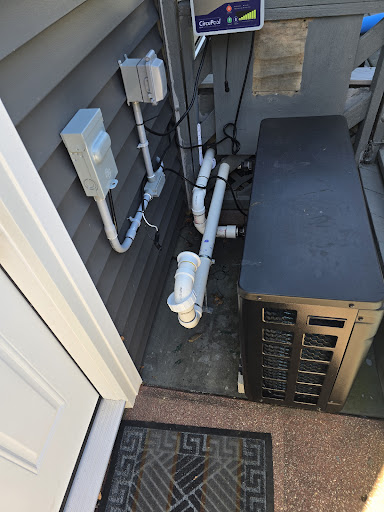
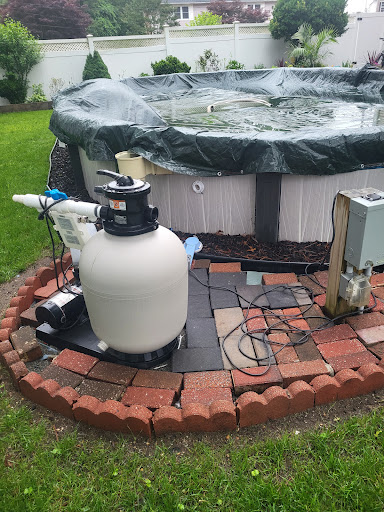
- Visual inspection of pump, plumbing, and equipment pad layout.
- Priming check and correction for pumps that lose prime or suck air.
- Seal, gasket, and lid O-ring inspection with replacement as needed.
- Leak tracking at unions, fittings, and drain plugs around the pump.
- Motor evaluation for noise, overheating, and bearing issues.
- Amperage and flow check to ensure the pump is moving water properly.
- Clear explanation of repair vs. replace options (single speed vs. VS).
- Re-priming and functional test before we leave your job.
- Note: Replacement pumps and major parts are quoted separately.
- Note: Underground suction-side leaks may require separate leak detection.
Why Choose Empire Pools for Pump Repair
- -specific planning for older pads, tight access, and long suction runs
- We diagnose the cause of the pump issue — not just the symptom
- Fast scheduling across LI with text updates before arrival
- Options for energy-efficient variable-speed upgrades when it makes sense
- Transparent recommendations & no-pressure quotes before any major work
- Clear water focus — we keep circulation and filtration in mind, not just the pump
- Satisfaction driven — we stand behind our pump work in
Call for pricing
Local Reviews
★★★★★
“Right off Sunrise Highway our pump kept losing prime. They tracked a tiny suction-side leak at a union and had it holding perfectly.” — M. Rinaldi,
★★★★★
“The motor got loud fast and we assumed it was done. They explained bearings vs. replacement and gave options. The system is quiet now.” — K. Donato,
★★★★★
“Weak flow and bubbles at the returns — they found the restriction on the suction side and restored full circulation the same visit.” — S. Mehta,
★★★★★
“A leak at the pump housing was driving us crazy. They pinpointed the seal issue and fixed it cleanly. Great communication.” — A. McBride,
★★★★★
“We’re near Merrick Road and debris loads the baskets fast. They cleaned the pad, reset valves, and the system finally runs right.” — T. Vitelli,
Pool Pump Repair — FAQs
My pump turns on, but it won’t fully prime — what do you check first?
We start with the basics that cause most prime issues: water level, skimmer weir movement, and the pump lid O-ring.
Then we check drain plugs, unions, and valve stems for tiny air leaks. After that we inspect the suction path for
restrictions (baskets, partially clogged impeller, dirty skimmer line, or collapsed flex). In many cases, a “bad pump”
is actually a starved suction line or a small air leak.
Why is my pump loud in even when it’s still circulating?
Loud pumps usually come from one of three sources: bearing wear, cavitation (restriction/air), or vibration from an
unstable base or plumbing tension. We listen for the sound profile, check for suction-side air, verify filter pressure,
and confirm the pump is sitting solid with no stress on unions. The fix depends on the cause — not the noise alone.
What causes bubbles at the returns and a pump that loses prime overnight?
That typically points to a suction-side air leak. Common culprits are the lid O-ring, drain plugs, union O-rings,
valve stem packing, or a skimmer that draws air when the water level drops. We trace the suction path, reseal what’s
needed, and confirm the system holds prime after shutdown.
Can you repair a leaking pump housing, or does it usually mean replacement?
Many “housing leaks” are actually shaft seals, lid gaskets, union O-rings, or drain plug threads — all repairable.
If the volute/housing itself is cracked, replacement is usually the correct call. We pinpoint the exact source first,
then give a straight repair vs. replace recommendation.
When does a variable-speed upgrade make sense, and what do you set up?
If your current pump is failing, you run the pool daily, or your energy use is high, a variable-speed upgrade can be
worth it. We handle installation, correct plumbing orientation for future service, and practical programming: a low
filtration speed, a skimming speed, and any feature speeds you actually use. Then we verify prime, stable flow, and
clean filtration so the upgrade performs the way it should.